SoftwareOne exit: A Prince or a Beast?
The beginning
Our ownership in Crayon and SoftwareOne has been interesting and profitable. We started out buying Crayon at low levels and bought more when the share was a short favorite in the Scandinavian market.
The Merger
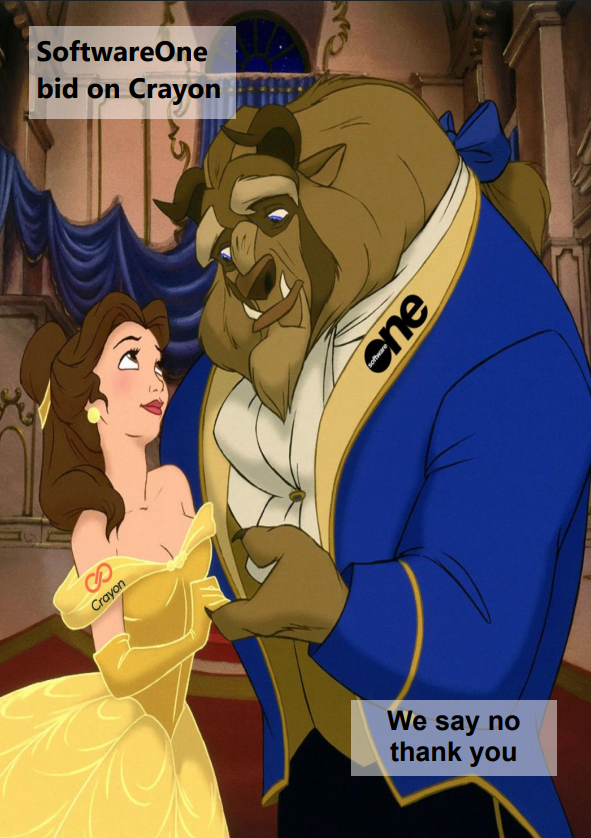
We started out on the positive side when the merger was announced but turned gradually towards "No thank you" after spending a lot of time on the potential merger. The industrial logic was obvious, but mergers often fail. We wrote a report, The Beauty and The Beast, and concluded we could not trust SoftwareOne, neither on cost savings nor on reporting quality and transparency on key figures. The merger finally ended with a yes; we took the cash portion off the table but decided to trust the board and the two CEOs with some of our remaining shares
The first phase
It started out very well:
Statements on developments in line with merger communication
Significant reduction in "adjustments" in their reporting
Growth at an acceptable level (although supported by pulled-forward customer renewals ahead of significant price hikes from Microsoft)
Margin improvement
We did not, however, like the very significant lack of relevant data points both on the merger and on key performance indicators. We were also not convinced that the 100 MCHF in cost savings were actually materializing, as other cost items started to move north... it's a key element to follow because it's linked to trust.
After Q2 2026 - Exit
Everything looked fine on the surface, and our initial take was supportive, but then we started to dig deeper again. And guess what? The 100 MCHF in cost synergies are being eaten up by underlying cost creep. SWON’s history of reporting successful cost savings that later disappear is returning. Here are the figures:
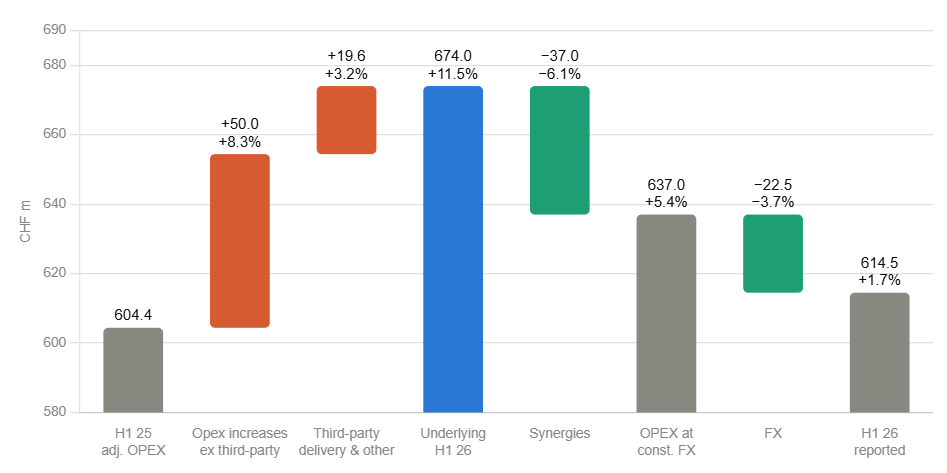
Look at the two red bars. As you can see, underlying cost increase is far above the savings from cost synergies.
Currently we are at 11.5% constant currency cost creep, a lot more than the annual 100 MCHF cost synergies. The management tried to convince us that everything is done to keep costs down, but CFO credibility is low. Facts and communication don't match, and the scalability is non-existing. There are obviously other elements to consider before an exit, but these are our two main killers.
Cost savings of 100 MCHF disappear again – What do you think will happen going forward, when they run out of cost synergies to realize?
Reporting quality and transparency remains poor, investor credibility is fading, again.
We are sorry, Rafi (CEO Raphael Erb). We like your background and qualities, but we have decided to exit.
Dear reader and investor, we are not totally sure on our conclusion this time, we might be wrong, but....
We don't own any shares so you can trust us (or perhaps you can't 🙂)


David and Sverre
Hvaler Invest AS
Lillestrøm, Norway
03.11.26
Disclaimer:
Hvaler Invest is a significant shareholder so you cannot trust us (or perhaps you can?)